
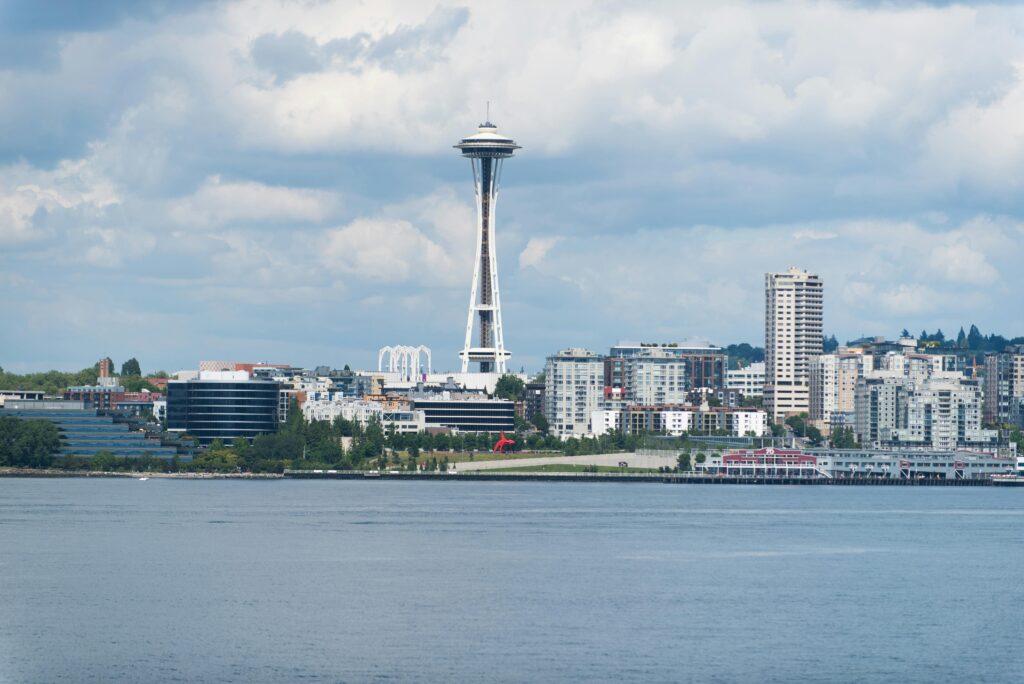
Many of Seattle’s top science-focused attractions are located near each other, especially around the cultural district anchored by Seattle Center. This area is one of the most important educational and cultural zones in the city, bringing together museums, theaters, and public learning spaces.
Seattle’s strong connection to technology, aerospace, and environmental research makes it a natural home for science museums that emphasize innovation and real-world applications.
Pacific Science Center
One of the most iconic science destinations in the city is the Pacific Science Center. Located near the Space Needle, it is a cornerstone of STEM education in the region and one of the most visited science museums in Washington State.
The Pacific Science Center is designed around interactive learning. Instead of simply observing exhibits, visitors are encouraged to touch, test, and experiment. This hands-on approach makes complex scientific concepts easier to understand and more engaging for all ages.
Key Attractions at Pacific Science Center
- Interactive physics and engineering exhibits
- Live science demonstrations
- Tropical butterfly house
- Planetarium shows exploring astronomy and space science
- Special traveling exhibitions on technology and nature
The museum plays a crucial role in inspiring future scientists and engineers, especially through school programs and youth education initiatives.
The Museum of Flight
Another major science-focused institution is The Museum of Flight, one of the largest air and space museums in the world. It is located just south of downtown Seattle and offers a comprehensive exploration of aviation history, aerospace engineering, and space exploration.
What Makes It Special
The Museum of Flight allows visitors to walk through historic aircraft, explore spacecraft models, and learn about the science behind flight. Its vast collection includes military jets, commercial airplanes, experimental aircraft, and even spacecraft used in space missions.
Educational Focus
- Aerodynamics and physics of flight
- History of aviation pioneers
- Space exploration and NASA missions
- Flight simulation experiences
- Engineering and design innovation
One of its most popular features is the hands-on flight simulators, where visitors can experience what it feels like to pilot an aircraft.
The museum’s scale and depth make it a must-visit for anyone interested in aerospace science and engineering.
Burke Museum of Natural History and Culture
While not exclusively a science museum, the Burke Museum of Natural History and Culture plays a significant role in scientific education. Located at the University of Washington, it focuses on natural history, paleontology, biology, and anthropology.
Scientific Collections
The Burke Museum houses extensive collections of fossils, minerals, plants, and animal specimens. It is also home to important archaeological and Indigenous cultural artifacts.
Key Scientific Areas
- Dinosaur fossils and prehistoric life
- Pacific Northwest geology and ecosystems
- Evolution and biodiversity
- Archaeology and human history
- Conservation science
One of the museum’s unique aspects is that it integrates scientific research with public education. Visitors can often see scientists actively working in research labs through glass-walled spaces.
Pacific Northwest Environmental Science Focus
Seattle science museums also emphasize environmental awareness due to the region’s natural landscape of forests, mountains, and waterways. Many exhibits focus on climate change, sustainability, marine ecosystems, and renewable energy.
The Pacific Science Center, in particular, features rotating exhibits that address environmental challenges and solutions, encouraging visitors to think critically about the future of the planet.
Interactive Learning and Hands-On Science
A defining feature of Seattle’s science museums is interactivity. Instead of passive viewing, visitors engage directly with exhibits.
At the Pacific Science Center, guests can:
- Build structures to test engineering principles
- Experiment with motion, energy, and gravity
- Explore optical illusions and light physics
- Participate in live experiments
At the The Museum of Flight, visitors can:
- Sit in real aircraft cockpits
- Try flight simulators
- Explore aerodynamic wind tunnels
This experiential approach makes science more intuitive and memorable.
Space and Astronomy Exploration
Space science is a major theme in Seattle’s science museums, reflecting the region’s connection to aerospace companies and innovation.
The planetarium at the Pacific Science Center offers immersive shows about stars, galaxies, and planetary systems. These experiences allow visitors to explore the universe in a visually stunning and educational format.
At the The Museum of Flight, space exploration exhibits highlight NASA missions, satellite technology, and the science behind human space travel.
Education and School Programs
Seattle science museums play a major role in education. Schools across the region regularly organize field trips to these institutions, integrating museum learning with classroom science curricula.
Programs include:
- STEM workshops
- Science camps for children
- Teacher training sessions
- Public lectures and science talks
- Youth innovation challenges
These programs help inspire future scientists, engineers, and researchers.
Seasonal Visitor Experience
Science museums in Seattle are especially popular during the city’s rainy seasons, making them ideal year-round indoor destinations.
- Spring: School field trips and new exhibit launches
- Summer: High visitor activity and special science events
- Fall: Educational programming and research-focused exhibits
- Winter: Peak indoor visitation due to weather conditions
The consistent availability of indoor learning spaces ensures continuous engagement regardless of season.
Why Seattle Science Museums Stand Out
Seattle science museums are unique because they combine education, innovation, and accessibility in a way that appeals to all age groups.
Key strengths include:
- Strong emphasis on hands-on learning
- Integration with technology and aerospace industries
- Focus on environmental and space sciences
- Collaboration with universities and researchers
- Family-friendly and inclusive design
Institutions like the Pacific Science Center and The Museum of Flight represent the city’s commitment to scientific curiosity and public education.
The Future of Science Museums in Seattle
Seattle science museums continue to evolve with advances in technology. Future developments are expected to include:
- More digital and augmented reality exhibits
- AI-driven interactive learning experiences
- Sustainability-focused science education
- Expanded aerospace and space exploration displays
- Stronger integration with local tech industries
As Seattle grows as a global technology hub, its science museums are likely to become even more innovative and immersive.
A Seattle science museums guide reveals a city deeply committed to exploration, innovation, and education. From hands-on exhibits at the Pacific Science Center to aerospace history at the The Museum of Flight and natural science collections at the Burke Museum of Natural History and Culture, Seattle offers a rich and diverse scientific landscape.
Anchored by its cultural hub at Seattle Center, the city’s science museums transform learning into an engaging and interactive experience.
Together, they make Seattle not just a place to observe science—but a place to experience it, question it, and be inspired by it.
Leave a Reply